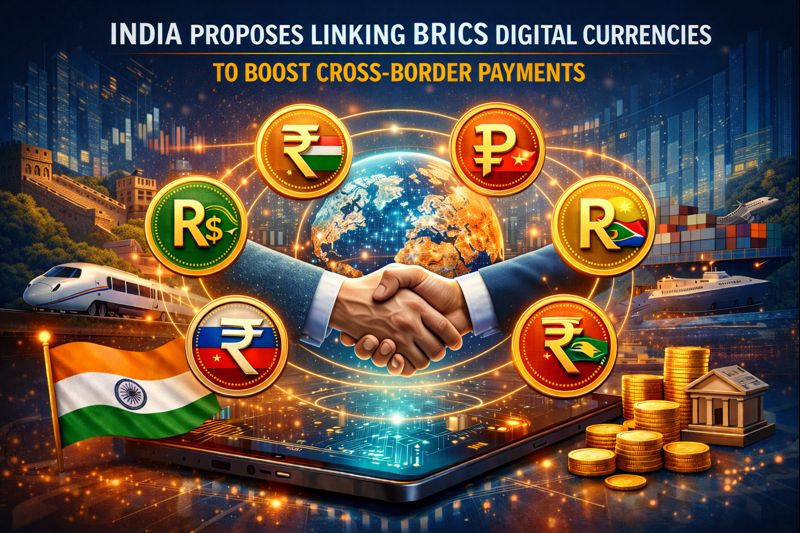
India has put forward a proposal to connect the official digital currencies of BRICS nations, aiming to make cross-border trade and tourism payments faster and more efficient, according to sources familiar with the matter. The move could gradually reduce dependence on the US dollar, especially as global geopolitical tensions continue to rise.
RBI Pushes CBDC Linkage at BRICS Level
Proposal Likely on 2026 BRICS Summit Agenda
The Reserve Bank of India (RBI) has recommended that the Indian government include the idea of linking central bank digital currencies (CBDCs) on the agenda of the 2026 BRICS summit, which India is set to host later this year.
If approved, this would mark the first formal proposal to integrate the digital currencies of BRICS members, which include Brazil, Russia, India, China, and South Africa, along with newer partner countries. The sources spoke on condition of anonymity as they were not authorised to comment publicly.
Potential Impact on Global Currency Dynamics
Reduced Reliance on the US Dollar
By enabling direct digital currency settlements among BRICS nations, the initiative could lower transaction costs and limit reliance on the US dollar for international payments. However, such a move may irritate the United States, which has repeatedly warned against efforts to bypass the dollar in global trade.
US President Donald Trump has previously labelled BRICS as “anti-American” and has threatened tariffs against member nations if they pursue alternatives to the dollar-dominated system.
Official Responses Remain Limited
The RBI, India’s central government, and the Central Bank of Brazil did not respond to requests for comment. China’s People’s Bank of China said it had no information to share, while the South African and Russian central banks declined to comment.
Notably, the RBI’s proposal to link BRICS digital currencies for trade finance and tourism payments has not been reported previously.
Building on Earlier BRICS Commitments
Focus on Payment System Interoperability
The proposal builds on a 2025 BRICS declaration made in Rio de Janeiro, where member nations agreed to explore interoperability between their payment systems to improve the efficiency of cross-border transactions.
The RBI has already publicly expressed interest in connecting India’s digital rupee with other countries’ CBDCs to speed up international payments and increase the global use of the Indian rupee.
RBI Clarifies De-Dollarisation Concerns
While the initiative may support alternatives to the dollar, the RBI has clearly stated that its efforts to promote the global adoption of the rupee are not aimed at de-dollarisation. Instead, the focus remains on efficiency, innovation, and smoother international settlements.
A Strategic Step Toward Digital Financial Integration
Overall, India’s proposal reflects a growing push among BRICS nations to modernise cross-border payments using central bank digital currencies. If adopted, the plan could reshape international trade settlements, strengthen financial cooperation among emerging economies, and enhance the role of digital currencies in global finance.